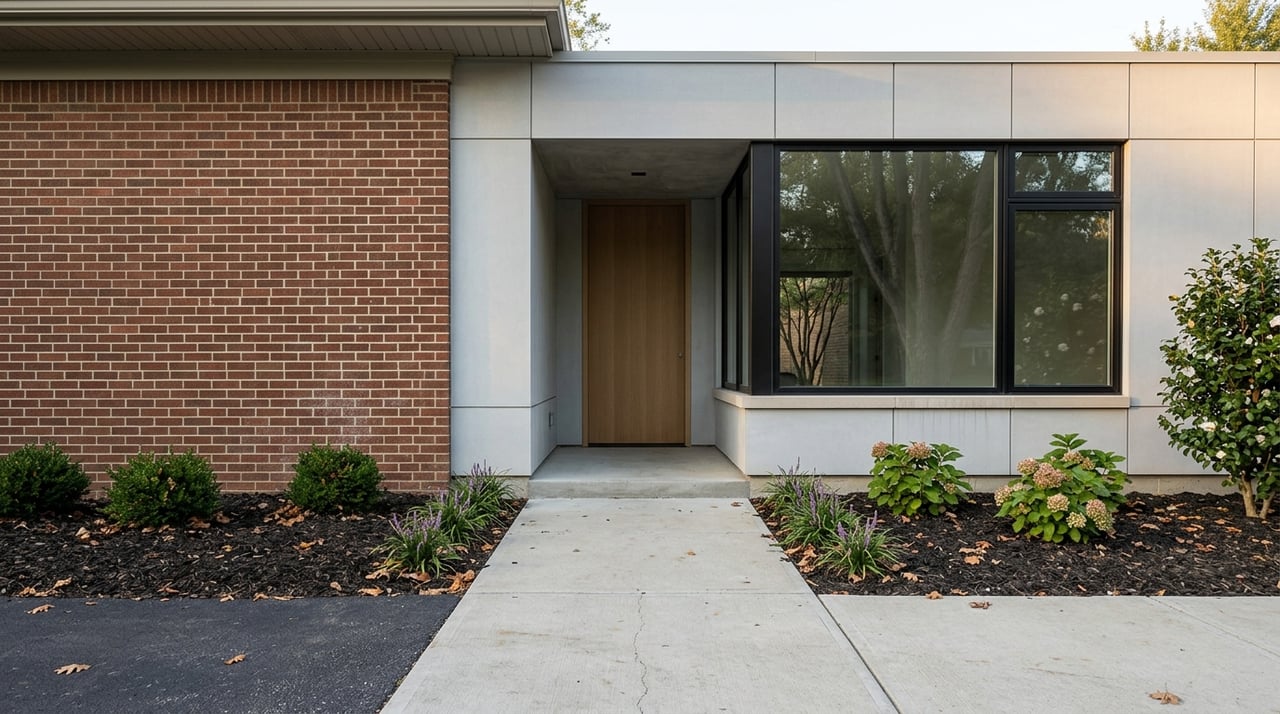
If your Cary home feels a little too tight, too dated, or just not quite right anymore, you are not alone. Many homeowners here are weighing the same question: should you improve the home you have or move up to a better fit? In a market where home prices are still high and competition remains active, the smartest answer depends on your numbers, your timeline, and how well your current home still works for your life. Let’s dive in.
Why this decision matters in Cary
Cary is not a low-stakes market. Recent local data shows median pricing around the low-to-mid $600,000s, depending on the source, with homes often selling close to list price and moving quickly.
That matters because both options come with real cost. Remodeling can help you stay in a location you already love, but moving up may solve problems that a renovation cannot fix. In Cary, the right choice usually comes down to comparing a targeted renovation against the real cost of buying into your next neighborhood or price tier.
What a move-up budget looks like
One of the biggest reasons this choice feels complicated is that Cary has a wide range of home prices. Neighborhood median list prices run from about $388,000 in Cary Park to roughly $1.285 million in MacGregor Downs, with many areas landing somewhere in between.
That spread means a move-up is not just about getting more square footage. It may also mean changing location, lot size, home style, or overall price band. For example, Realtor.com reports neighborhood medians around $550,000 in Weston, $625,000 near Cary Town Center, $649,000 in West Cary, $659,000 in Amberly, and $737,500 in Lochmere.
Zip code pricing shows a similar pattern. Reported medians are about $519,000 in 27513, $544,500 in 27511, $678,995 in 27519, and $725,000 in 27518.
When remodeling makes sense
Remodeling often makes the most sense when your current location and lot still work well for you. If you like your street, your commute, your outdoor space, and your general footprint, improving the house itself can be the more practical path.
Cary’s housing plan specifically supports rehabilitation as a way to preserve safe, functional housing and help residents age in place. That gives useful local context for homeowners who want a better everyday layout without leaving the community they already know.
In Cary, targeted updates may be easier to justify than a full gut renovation. Local buyer-feature data from Redfin suggests that practical upgrades like two full bathrooms, en suite bathrooms, storage areas, mud rooms, and bedroom suites line up well with what buyers appear to value.
Which upgrades may carry more weight
Not every project adds the same kind of value. In general, Cary buyers seem to reward improvements that make a home more functional, easier to live in, and more appealing from the street.
Based on local feature trends and broader remodeling resale data, the strongest update categories often include:
- Bathroom improvements
- Better storage solutions
- Mud room or family-function space upgrades
- Exterior curb appeal updates
- Entry door or garage door replacement
- Minor kitchen updates with broad appeal
National 2025 resale data summarized by NARI points to especially strong cost recovery for visible exterior projects. Garage door replacement was listed at 268% cost recouped, steel entry door replacement at 216%, manufactured stone veneer at 206%, and a mid-range minor kitchen remodel at 113%.
For Cary homeowners, that supports a simple idea: high-impact, lower-friction projects often beat highly personalized luxury renovations when you are trying to balance enjoyment now with resale later.
When moving up makes more sense
Sometimes the issue is not finish level. It is the house itself.
If you need more bedrooms, a different bath count, a better overall layout, or a different Cary price tier, moving may be the cleaner solution. A remodel can change a lot, but it cannot always fix a floor plan that fundamentally does not fit how you live.
This is especially true if your project would require major structural work, a large addition, or extensive reconfiguration. Once the scope becomes complex, your budget, timeline, and stress level can rise quickly.
The permit and contractor side of remodeling
In Cary, many remodels, repairs, alterations, decks, porches, and additions require a residential building permit. For eligible small projects, SPOT review is typically completed in 1 to 4 business days, while regular review is usually seven days or less.
That timeline can sound manageable, but scope matters. Cary notes that additional site approvals and environmental permits may be needed if a project affects floodplain areas, stream buffers, or erosion control.
Structural changes, additions, and major interior remodels may also require plot plans, sealed surveys, or engineering input. That can push a project well beyond the timeline of a simple cosmetic refresh.
There is also a contractor threshold to keep in mind. In North Carolina, projects costing $40,000 or more require a licensed general contractor.
If work was done without a required permit, Cary allows owners to bring it into compliance, but double permitting fees apply. That is one more reason to plan carefully before starting a major renovation.
The tax side of moving up
A move-up purchase does not just affect your mortgage. It can also affect your annual tax bill.
Cary’s FY 2026 municipal property tax rate is 34 cents per $100 of assessed value, and the Town says that is the lowest municipal rate among Wake County’s 12 municipalities for the 18th straight year. Even so, taxes are based on assessed value through the county revaluation process.
In practical terms, if you move into a more expensive home, your annual property tax bill usually rises because the assessed value is higher. That does not automatically mean moving is the wrong choice, but it should be part of your side-by-side comparison.
A practical Cary decision framework
If you are trying to choose between moving up and remodeling, start with the real problem you are solving. Be honest about whether the issue is cosmetic, functional, or fundamental.
A targeted remodel is usually the better fit when:
- You like your current location and lot
- Your home mostly works, but needs a few important improvements
- The updates are focused on bathrooms, storage, layout flow, or curb appeal
- You want to avoid the jump into a higher Cary price band
A move-up is usually the better fit when:
- You need a different bedroom or bathroom count
- The layout no longer supports your daily life
- Your remodeling scope is becoming structural or permit-heavy
- The cost of renovation is getting close to the gap between your home and the next realistic Cary option
That last point is the key one. In Cary, the smartest comparison is often not remodel cost versus a generic national average. It is remodel cost versus the actual price gap between your current home and the kind of home you would realistically buy next.
Why preparation matters if you move
If you decide to move up, Cary’s market still rewards preparation. Redfin reports that many homes receive multiple offers, and some buyers waive contingencies. Homes are also selling quickly, with reported days on market ranging from about 10 to 22 days depending on the source.
That means a casual search can get frustrating fast. You will likely do better with a clear budget, a realistic target area, and a plan for how your current home fits into the timeline.
If you decide to stay and improve, preparation matters there too. Scope, permits, contractor licensing, and resale priorities can all shape whether the project feels smooth or expensive.
The best next step for your Cary home
For many Cary homeowners, this is not really a question of moving versus remodeling in the abstract. It is a question of whether a focused, code-compliant renovation can deliver what you need better than buying into the next Cary price tier.
That is where local guidance matters. A smart decision should account for your home’s current value, the likely cost and complexity of updates, and what your budget could buy in the Cary neighborhoods you would actually consider.
If you want help comparing those options with real local context, The Oxford Team at Compass can help you evaluate your current home, your next-step budget, and the path that makes the most sense for your goals.
FAQs
Should I remodel my current home in Cary or move to a larger one?
- If your location and lot still work well and your needs can be solved with targeted updates, remodeling may make sense. If you need a different layout, more bedrooms or bathrooms, or a different Cary price tier, moving up may be the better option.
What home upgrades seem most valuable to Cary buyers?
- Redfin’s Cary feature trends suggest buyers respond well to practical features such as two full bathrooms, en suite bathrooms, storage areas, mud rooms, bedroom suites, and other livability-focused upgrades.
Do I need a permit for a remodel in Cary?
- Many Cary remodels, repairs, alterations, decks, porches, and additions require a residential building permit. Smaller eligible projects may go through SPOT review in 1 to 4 business days, while regular review is usually seven days or less.
When does a Cary remodel become more complicated?
- Complexity rises when a project involves structural changes, additions, site impacts, engineering input, or a budget of $40,000 or more, since North Carolina requires a licensed general contractor at that threshold.
How much more expensive is moving up within Cary?
- Cary pricing varies widely by neighborhood and zip code, with reported neighborhood medians ranging from about $388,000 to $1.285 million. The real question is how your renovation budget compares with the gap between your current home and the next realistic home you would buy.
Will moving to a more expensive Cary home raise my property taxes?
- Usually yes. Cary’s municipal tax rate is based on assessed value, so moving into a higher-value home generally increases your annual tax bill even if the tax rate itself stays the same.