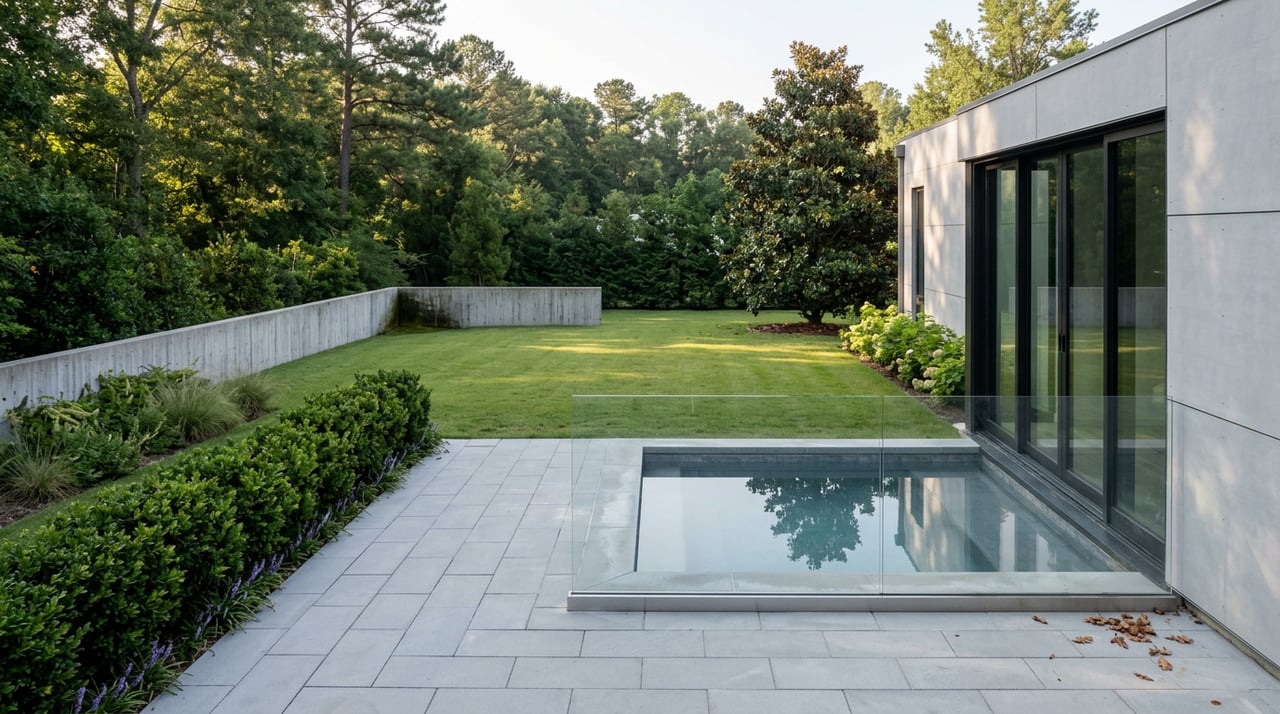
A homeowner in one of Chapel Hill's historic districts once asked the Historic District Commission for permission to build an iron and chain-link fence around a large piece of property. The reason was deer, not aesthetics. He wanted to keep them out of his garden. The commissioners, who understand as well as anyone how little deer respect a planting plan, were sympathetic. They still had to weigh the request against the same design standards that govern paint, porches, and property lines in Chapel Hill's oldest neighborhoods. That is the texture of life inside a local historic district: even a fence meant for wildlife control runs through a formal review.
Most buyers hear "historic district" and think charm, mature trees, walking distance to Franklin Street. Fewer think about the commission meeting that stands between a homeowner and a new deck. But if you are comparing Chapel Hill neighborhoods this fall, that meeting is exactly the detail worth understanding, because the price data for Chapel Hill's historic core is not behaving the way the rest of the market is.
Three neighborhoods, one commission
Chapel Hill has three local historic districts: Franklin-Rosemary, Cameron-McCauley, and Gimghoul. Franklin-Rosemary came first, created by the Town Council in 1976 and tied to the growth of the university going back to 1795. Cameron-McCauley and Gimghoul followed in 1990. All three sit close to the UNC campus, and all three fall under the authority of the same nine-member Historic District Commission, which reviews exterior changes to protect what the town calls the special character of the district.
That review process has a name: the Certificate of Appropriateness, or COA. If you own a house in one of these districts and want to change anything visible from the street, from a new roofline to a rebuilt porch, you need one. The commission does not weigh in on interior renovations, and it does not regulate paint color despite what some homeowners assume. But new construction, additions, and demolition of all or part of a structure all require sign-off.
Some of that oversight is genuinely light. Town staff can approve minor projects without a full hearing: walkways built of common red brick or Chapel Hill gravel, gutters painted to match the house, a rear deck that stays under 10 percent visible from the public right of way, fieldstone walls under three feet tall. Anything bigger goes to the full commission, which meets the second Tuesday of each month at Town Hall. Miss that meeting, and your project waits a month. The combined COA and zoning compliance permit carries a $570 fee.
The stakes get real when a demolition is on the table. State law limits how far a local commission can go here. The Historic District Commission cannot deny a demolition request outright, only delay it. Local records describe a case where an out-of-state developer bought two adjoining historic houses, and the commission braced for exactly that scenario: an application it could slow down but not stop. For a seller sitting on a tear-down candidate, or a buyer hoping to build new inside district lines, that distinction between "no" and "not yet" matters more than almost anything else in the process.
The number that doesn't fit the story
Here is where it gets interesting for anyone comparing neighborhoods on paper. Chapel Hill as a whole has had a strong year. Over the three months ending July 2026, the median sale price across the city was $661,000, up 15.5 percent from the same period a year earlier, with homes typically selling in 35 days.
Downtown Chapel Hill, the area that overlaps most of the historic core, tells a different story. Over the three months ending June 2026, the median sale price there was $860,000, down 6.0 percent from a year earlier, and Redfin's own market data describes it as not very competitive. A market where the citywide median is climbing by double digits and the most storied, most photographed part of town is losing ground is not something you'd guess from a listing photo.
Zoom into the individual districts and the picture gets more specific. Current Zillow neighborhood estimates put Franklin-Rosemary's typical home value near $1.17 million, the highest of the three local districts, largely because of its walk to Franklin Street's restaurants and shops. Cameron-McCauley, the smaller historic pocket west of campus, runs closer to $773,000. Both districts operate under the identical COA process. Both require the same certificate for the same kind of exterior work. Yet one commands nearly 50 percent more than the other.
Location explains some of that gap. Franklin-Rosemary's proximity to downtown is worth a real premium no matter what commission you answer to. But the fact that Downtown Chapel Hill overall is underperforming a city having a banner year suggests something else is happening on top of location: a market that is pricing in the timeline risk and renovation friction that comes standard with a district address, even while it rewards walkability within that same district.
Prestige without the paperwork
The clearest evidence that the COA process itself is doing some of this work sits just outside the local historic districts. Laurel Hill and Rocky Ridge, which includes most of the Laurel Hill Road neighborhood, is a National Register historic district rather than a local one. That distinction matters enormously. Owners there get the historic pedigree, the mature tree canopy, the same general vintage of architecture, without triggering a Certificate of Appropriateness for exterior work unless the property also happens to sit inside a local district boundary.
Current Zillow figures put Laurel Hill - Rocky Ridge's typical home value above $1.23 million, higher than either Cameron-McCauley or Gimghoul and in the same range as Franklin-Rosemary, without the monthly commission hearing standing between an owner and a renovation. Estes Hills, another nearby neighborhood outside the local historic overlay, runs closer to $746,000, comparable to Cameron-McCauley but again without the same layer of review.
Read side by side, the four neighborhoods make the point better than any single statistic could. Historic character sells. A monthly hearing and a certificate requirement do not add to that appeal. They tax it, and the tax shows up most clearly in the parts of the historic core that don't have Franklin-Rosemary's walk-to-everything location to offset it.
What this means if you're comparing Chapel Hill neighborhoods
If you're deciding between a historic-district address and something a few blocks outside the line, a few things are worth carrying into that decision:
- A local historic district address means every exterior change, from a new deck to a repainted trim color that alters an architectural feature, needs town review before you touch it. Budget both time and a modest fee into any renovation plan.
- The gap between what staff can approve and what needs a full commission hearing is not small. If your project falls outside the staff-approvable list, expect to wait for the second Tuesday of the month, and expect another month if the commission asks for revisions.
- If a teardown or major rebuild is part of your plan, know that the commission can delay demolition but state law prevents it from blocking one outright. That changes the risk calculus for both a buyer eyeing a fixer and a seller marketing one.
- Neighboring areas with National Register status but no local historic district overlay, like Laurel Hill - Rocky Ridge, can offer comparable architectural character and comparable or higher home values without the same certificate requirement. If the goal is historic charm rather than a specific address inside Franklin-Rosemary or Cameron-McCauley, it's worth widening the search.
- Location within the historic core still commands its own premium. Franklin-Rosemary's proximity to Franklin Street is doing real work in its price data that Cameron-McCauley's setting west of campus does not replicate to the same degree.
None of this makes a historic district a bad place to buy. Landmarks like the Chapel of the Cross, the Playmakers Theatre, and the Phillips House aren't going anywhere, and neither is the appeal of walking to campus from a wide front porch. It just means the decision is not purely about charm versus newer construction. It's about which specific streets carry the location premium strong enough to absorb the process, and which ones are quietly discounted because of it.
FAQ
Does every exterior change in a Chapel Hill historic district require a hearing? No. Town staff can approve minor items like brick or gravel walkways, matched gutter colors, small rear decks under 10 percent visible from the street, and low fieldstone walls without a full commission meeting. Larger or more visible changes go before the nine-member commission at its monthly meeting.
Can the Historic District Commission stop a demolition? It can delay one, but state law does not allow a local commission to deny a demolition request outright. That is an important distinction for anyone buying with redevelopment in mind inside district boundaries.
Is a National Register historic district the same as a local historic district in Chapel Hill? No. National Register status is largely honorific and doesn't require a Certificate of Appropriateness on its own. Chapel Hill's three local districts, Franklin-Rosemary, Cameron-McCauley, and Gimghoul, are the ones where exterior work needs town approval before you start.
Comparing a historic address against a newer one a few streets over is exactly the kind of decision that benefits from someone who's walked the process end to end. If you're weighing a Chapel Hill purchase or getting ready to list a home inside one of these districts, The Oxford Team can walk you through what a Certificate of Appropriateness will actually mean for your timeline, and help you decide which streets are worth the paperwork. Request a Free Home Valuation to start the conversation.